Methodologies, financing models and tools
Regarding methodologies, the main approach used on bankability topics is the combination of stakeholder engagement and financial engineering. We ensure that each entity shares best practices and collaborates in building a value-creating solution for all stakeholders: civil society, governments, public financial institutions (banks, funds and insurers), private companies, think tanks and the academic community. Financial engineering is the common thread that guarantees the measured use of scarce public funding to mobilise private capital in order to successfully implement the projects required for the transition. Mobilising stakeholders through working groups, plenary sessions, co-drafting of roadmaps etc. helps to validate the credibility of the solutions implemented, going beyond the necessary recommendations.
Financial models aim to reveal value creation through the various impacts identified. The first step is to qua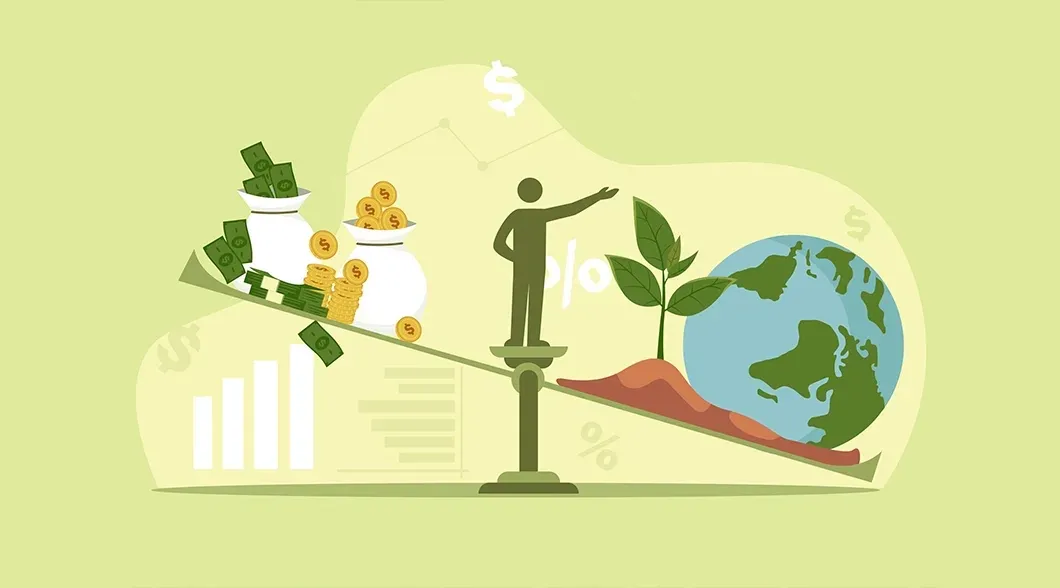 ntify and verify these impacts so that all stakeholders can agree on the project’s added value. The monetisation of this impact then requires not only identifying which stakeholders benefit from it, but also determining the appropriate financing arrangements. As a result, value creation is often formalised through contractual structures that demonstrate the value generated and the parties involved in the transaction.
There are many types of financial models, ranging from the identification of cash flows and the monetisation of co-benefits, to the integration of insurance-based models for projects that generate avoided costs. Innovative approaches beyond traditional banking frameworks also exist: equity participation alongside standard loan structures, guarantees, de-risking mechanisms, blended debt–equity structures, collateralisation and contracts-for-performance are all possible options.
Key figures
Depending on how projects are implemented, the resulting impacts differ. In the case of energy renovation, focusing exclusively on deep retrofits for single-family homes makes it possible to anticipate reductions in energy expenditure by a factor of 4 to 8, with a confidence level above 95%. This illustrates how a project generates impact and how this impact can be monetised. Such certification underpins contractual arrangements.
Similarly, property revaluations by experts (for instance notaries, who may observe increases of more than 30%) show that well-designed renovation frameworks can raise the value of an asset sufficiently to cover a large share of the costs. In the case of deep renovation, we can demonstrate a reduction in social costs, amounting to several thousand euros per year per deep renovation, thus providing a clear answer in addition to energy savings, emission reductions, and improved housing conditions. Cost–benefit analyses are also highly relevant for adaptation-related projects. Investing $1 in adaptation can yield more than $10.50 in benefits over 10 years.
Related projects



Meet our methodologies, financing models and tools team

Guillaume Lorentz
Head of bankable sustainable solutions
Guillaume Lorentz has over 20 years of experience in the financial sector, including senior roles at major investment banks such as HSBC. After five years working in market and model risk management, he spent 15 years in trading as a director in Paris and London, focusing primarily on structured products for global portfolios. His financial expertise has since expanded into sustainable finance, with a strong emphasis on the bankability of sustainable solutions through financial engineering. He has extensive implementation experience across fifteen countries in Africa, particularly in energy efficiency, sustainable cities, and carbon markets. At the Sustainable Finance Observatory (SFO), he leads the Bankability and Modelling Division, covering adaptation, biodiversity, energy, and climate-related topics.

Lisa Bacon
Nature-finance analyst
Lisa is a Nature and Climate Finance Analyst. Her work focuses on exploring solutions in the realm of finance and policy to reallocate financial flows towards nature restoration and climate adaptation projects. She joined the Observatory in 2024 after having worked in sustainable finance within the banking sector, following her studies in management and finance at HEC Paris, and Public Policy at the University of Tokyo

Mirindra Rabemanantsoa
Project Manager
Mirindra specializes in sustainable finance and just transition, focusing on integrating social and environmental considerations into public policies and financial decision-making. She co-leads energy efficiency initiatives, developing financing schemes to scale up renovations. She sees energy efficiency as a cornerstone of a just transition, reducing emissions while addressing energy poverty and improving living conditions. Her work emphasizes inclusive financing tools that ensure the benefits of the energy transition reach those most affected by climate and social inequalities.