Discover our work and vision through our executive board
Message from Francois Gemenne, Chairman of the Board of Directors
The past months have been challenging for sustainable finance. COP29 was supposed to deliver on climate finance but did not meet expectations and ended in bitter disappointment for countries of the global South. The US withdrawal from many processes of international cooperation – from the Paris Agreement to UNOC or the WHO – combined with the dismantling of US Aid, resulted in a sharp drop of the amount of funding available for development.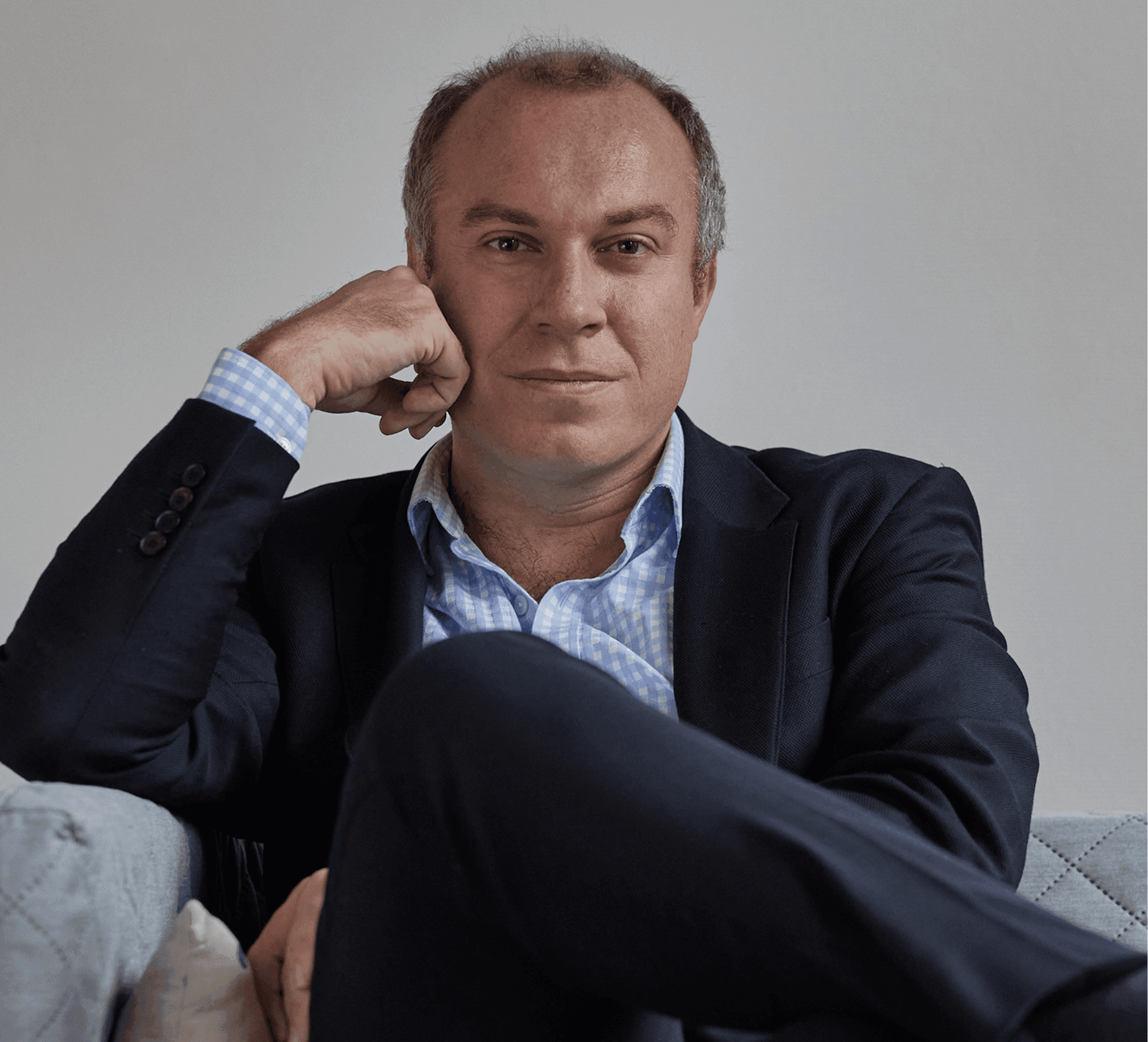
All over Europe, policies for ecological transition are being paused or halted, for lack of funding. This difficult context means that sustainable finance cannot just be public finance. The mobilisation of private finance is more crucial than ever, which makes the mission of the Sustainable Finance Observatory more relevant and salient than ever.
There are currently some strong headwinds against the ecological transition, and the very concept of sustainability, once consensual, has become for some an ideological marker. Yet opinion polls – included some we conducted ourselves – indicate that the ecological transition continues to enjoy a wide and strong support in public opinion. An overwhelming majority of people want more action against climate change, but they often feel like the minority. A fascinating experiment conducted in the US some time ago – at a time when it was still possible to conduct such experiments in the US – asked people how much of a pot of $450 they were willing to give to a charity that would invest the money in renewable energy, and how much they were willing to keep for themselves. On average, the majority of people were willing to give half of the money to the charity. But they were also convinced that the other participants had kept the money for themselves. And this is where it gets interesting: when they were told that this wasn’t the case, participants were actually willing to give even more to the charity. The experiment reminds us that the transition is a collective process, at the end of the day. And this is the reason why leveraging private funds is so important.
Many studies and observers argue that we have now reached a point in public opinion where we needed to build a ‘majority pivot’, in order to empower this silent majority to take concrete action. The time is no longer about sounding the alarm or convincing everyone to take small steps: the time is about providing the tools that can catalyse collective action. And the Sustainable Finance Observatory strives to provide such essential tools - such as MyFairMoney for retail investors.
Message from Raphaël Lebel, Executive Director
The year 2025 marks a pivotal moment in our collective journey towards the goals of the Paris Agreement - and the Sustainable Development Goals more broadly. It is a turning point: a moment to reflect on the limits of past strategies and to reimagine how we can contribute to transforming our societal - through finance - in an increasingly complex and uncertain world. The shift away from net-zero ambitions for initiatives such as GFANZ did not spell the end of all commitments. Indeed, many financial institutions have maintained their climate targets. Yet we are seeing growing political resistance to regulatory efforts and pushback - especially in Europe on due diligence and sustainability reporting. This movement risks undermining the momentum of companies that are genuinely committed to long-term sustainable transformation and have developed robust transition plans.
It seems we are reaching the end of a particular era - one shaped dominantly by top-down regulation and "name and shame" tactics. Today, these approaches must be complemented by pragmatic, solution-level strategies, grounded in the real economy, which offer promising pathways to achieving sustainable development within planetary boundaries.
This next phase begins just as we exit three decades of relative geopolitical stability - arguably the most stable period in human history - and a time of energy abundance. The global economy has doubled in size, and yet deep inequalities persist between high-income and low-income countries. Meanwhile, public subsidies are shrinking, and the transition ahead cannot depend solely on public funding. And yet - the need for transition has never been more urgent.
Scientists tell us this is our last window of opportunity. Policymakers face ever tighter budget constraints. Corporates and entrepreneurs are calling for investment to bring low-carbon and nature-based innovations to scale - the solutions exist, but finance is lacking. Civil society organisations are under strain, struggling to sustain essential awareness-raising efforts. Individual and private investors are increasingly looking to support meaningful projects with their capital. Our studies, based on five years of analysis across Europe, show that 74% of retail investors have sustainability-related objectives!
Academics report that younger generations are eager to contribute to the transition - yet research remains underfunded and career paths uncertain. And funders too are seeking new, cross-cutting platforms to deliver real-world impact through sustainable finance - driven by innovation, transparency, and collaboration. That’s why we are taking a bold new step. With the merger of 2° Investing Initiative and the Observatoire de la finance durable, we launched a new, independent organisation, purpose-built for this new era - resilient, interdisciplinary and mission-driven.
Like a trimaran, our structure rests on three complementary hulls:
- Transparency, to bring clarity and coherence to sustainability regulations and initiatives
- Impact, to ensure better capital allocation aligned with the real economy and sustainability goals
- Bankability, through a new department focused on developing bankable solutions to finance both the transition and adaptation using private capital
We are entering a more complex time. But complexity does not mean impossibility. With the right expertise - we build on 13 years of experience engaging with private financial actors - and with the right tools, partnerships, and shared vision we believe we can help make the financing of the transition a reality.
Message from Emilie Maehara, Deputy Executive Director
There is a growing consensus within the international community that unlocking private capital at scale is one of the most urgent and critical challenges - and prerequisites -for achieving the Sustainable Development Goals and the Paris Agreement objectives. Estimates from the UNFCCC and the IMF indicate that between 70% and 90% of the financing required to meet these goals must come from the private sector.
Since 2012, the Sustainable Finance Observatory has been a pioneering think tank dedicated to producing knowledge and actionable solutions on this issue. Building on over a decade of expertise, the Sustainable Finance Observatory is uniquely positioned to contribute by developing innovative financial engineering solutions to mobilise private capital at scale in underfinanced sectors such as adaptation and biodiversity, as well as in underfinanced geographies. Removing the persistent barriers to private investment is essential. We live in an interdependent world, where the climate and energy transitions of developing countries, the preservation and restoration of biodiversity, and adaptation to climate change are all vital global public goods and critical to securing a sustainable future for both people and the planet.
Bridging the vast and systemic climate finance gap in developing and emerging countries has become a top priority for the international community, as evidenced by the endorsement of the New Collective Quantified Goal at COP29. The SDG financing gap in developing countries has now reached USD 4 trillion annually, with these countries (excluding China) representing 45% of global investment needs to achieve climate goals. Unlocking significantly more private capital is urgent, as many of these countries are trapped in a public financing deadlock caused by sovereign debt distress and a decline in Official Development Assistance (ODA). This means that many cannot increase their borrowing from multilateral or bilateral development banks, while only 5% of total international climate finance is delivered in the form of grants.
At the same time, these countries face structural challenges in accessing private capital, with 95% of global financial assets concentrated in developed countries and China. The issue is not a lack of available capital globally, but rather a lack of investable projects and vehicles that meet the credit and risk/return requirements of private investors - especially in the context of high perceived risks and high capital costs in developing markets. This same diagnosis applies to key sectors suffering from chronic underfunding. For example:
- Adaptation to climate change requires a tenfold increase in current financing levels
- Biodiversity conservation faces an annual financing gap of USD 700 billion
The good news is that solutions exist. Proven financial techniques - such as structured and project finance, blended finance, co-financing, credit enhancement mechanisms (e.g. guarantees) and insurance-based models - can be leveraged to close the gap. Financial engineering enables the transformation of non-bankable needs into bankable investment opportunities, as demonstrated by numerous innovative practices around the world that now need to be scaled.
The Sustainable Finance Observatory draws on the expertise of former senior bankers within its team and its Scientific Committee to develop bankability models tailored to diverse sectors and geographies. This form of financial engineering is more essential than ever to accelerate the transition by “doing more with less”, optimising the use of scarce public resources. For instance, the European Union’s upcoming multiannual financial framework for 2028–2034 places a strong emphasis on attracting and maximising the mobilisation of private capital, using public funds as a catalyst. The Sustainable Finance Observatory is now fully equipped to contribute meaningfully to financial innovation aimed at unlocking private capital at scale for a sustainable transition, through its three interdependent pillars of action: Transparency, Impact, and Bankability.
Bankability is inherently linked to impact. Without measurable impact - whether in the form of positive cash flows, cost avoidance, or other quantifiable benefits (with additionality as a key parameter) - there can be no monetisation. And these elements only carry true value when they are rooted in integrity and transparency. There are many areas of financial innovation ahead, and the Sustainable Finance Observatory is fully committed to developing practical, immediately applicable solutions to accelerate the implementation of the SDGs, and climate and biodiversity goals.