
The program aims to support the effective implementation of EU sustainable finance reforms in retail financial markets by strengthening investor understanding, improving market practices, and enhancing supervisory capacity in Bulgaria, Estonia, and Romania. By generating evidence on retail investor sustainability preferences, assessing market practices and product claims, and developing practical tools and training formats, the project seeks to ensure that sustainability preferences—particularly climate-related objectives—are meaningfully integrated into financial advice and product distribution.
Retail Investing for the Green Transition: Making Sustainable Finance Work in Practice
Across Europe, new sustainable finance rules are reshaping how retail investors’ preferences must be considered in financial advice and product distribution. With reforms to MiFID II and the Insurance Distribution Directive (IDD), sustainability preferences are now legally embedded in investment processes. Yet a critical gap remains between regulatory ambition and real-world outcomes: many retail investors still struggle to translate their sustainability goals into meaningful investment choices, while markets continue to be affected by greenwashing and limited oversight.
The EUKI-funded project “Implementation of the EU reform on retail investing for the green transition” addresses this gap by supporting the effective implementation of EU sustainable finance rules in Bulgaria, Estonia, and Romania. The project focuses on strengthening investor understanding, improving market practices, and building supervisory capacity so that retail savings can better support the green transition.
Why the project matters
Although sustainability preferences are now formally recognised in EU financial regulation, their practical implementation remains uneven—particularly in emerging sustainable finance markets. Retail investors often lack the tools and information needed to identify credible green and impact-oriented products. At the same time, financial advisors and product providers face challenges in interpreting sustainability preferences, while supervisors struggle to monitor compliance and misleading claims.
As a result:
- Retail investors are unable to reliably identify financial products aligned with their sustainability-related objectives,
- Sustainable finance demand remains underutilised,
- And greenwashing risks continue to undermine trust in sustainable financial products.
Against the backdrop of the European Green Deal and rising climate ambition, these shortcomings threaten to slow the mobilisation of private capital for climate mitigation. The EUKI project responds to this need with a structured, evidence-based approach to implementation.
What we do
The project develops and deploys practical tools, research, and training formats that support the real-world application of EU sustainable finance rules in retail markets. It builds on solid methodologies developed and tested by Sustainable Finance Observatory in previous European projects and adapts them to national contexts in Bulgaria, Estonia, and Romania.
Core activities include:
- Large-scale consumer research to understand retail investors’ sustainability preferences,
- Market practice assessments, including mystery shopping and analysis of impact claims,
- Impact potential assessments of selected financial products,
- And the development of online tools and training platforms for investors, advisors, and supervisors.
Together, these activities help move beyond formal compliance towards meaningful integration of sustainability preferences in financial decision-making.
From research to real-world implementation
The project combines three key elements:
- Replicability and Credibility, through robust research methodologies and open-access outputs;
- Stakeholder engagement, involving regulators, financial institutions, advisors, consumer organisations, and academia;
- Digital tools and online platforms, enabling scalable access to information, training, and impact-oriented financial products.
Key outputs include:
- National reports on investor demand, market practices, and product availability,
- Databases of financial products with high climate impact potential,
- Online training modules for financial advisors and supervisors,
- And national MyFairMoney websites that help retail investors understand sustainable finance and avoid greenwashing.
Who benefits
The project supports:
- Retail investors seeking to align their savings with sustainability-related objectives,
- Financial advisors and distributors implementing new sustainability requirements,
- Product manufacturers developing credible sustainable and climate-oriented offerings,
- Supervisory authorities strengthening oversight and enforcement,
- And ultimately the real economy, by improving the flow of retail capital towards investments that support climate mitigation.
Our ambition
The long-term ambition of the project is to help turn EU sustainable finance regulation into effective market practice. By strengthening investor literacy, improving transparency, and equipping supervisors in the target countries with the right tools, the project contributes to more trustworthy, impactful, and climate-aligned retail finance markets in Central and Eastern Europe.
In doing so, it supports the broader objective of the European Climate Initiative: accelerating the transition to a climate-neutral economy by mobilising private capital where it can make a real difference.

Nicola Stefan Koch
Head of Retail and Impact Investing
Nicola leads the Retail and Impact Investing research programme. In this role, he oversees research, policy engagement, product development, and communications focused on how individuals can invest sustainably and how markets can better meet retail investors’ sustainability goals. Before joining the Sustainable Finance Observatory, Nicola worked as a sustainability consultant and analyst, where he focused on sustainability strategy, performance analysis, and communication projects. He also managed development of a sustainability assessment methodology used in over 150 company analyses. He holds a master’s in international politics, Administration and International Relations from Zeppelin University (with a sustainable development focus) and a bachelor’s in international economics and development from the University of Bayreuth.

David Cooke
Law and policy Lead
David is a lawyer by training and specialises in sustainable finance and the intersection of research, policy and regulation. He has worked across international trade, emerging market finance and climate change consulting and holds a Master’s in Sustainable Development. He previously worked at ClientEarth, the UK-based public interest law firm, where he focused on regulatory and legal strategies to improve corporate and investor transparency on climate-related financial risk, and engaged with financial regulators and government departments to strengthen oversight and accountability. He joined the Sustainable Finance Observatory in 2019 and provides cross-cutting support to research programmes on legal and policy implications.

Ana Rivera Moreno
Senior Sustainable Finance Analyst
Ana is a Senior Analyst working on sustainable finance within the retail and impact team. She holds Master’s degrees in Economics and in Public Policy and Development from the Paris School of Economics, following earlier training in Economics at the National University of Colombia. Before joining the Observatory in 2022, she worked at the OECD and held analytical roles in Colombian public institutions, including the Ministry of Trade and the National Planning Department, where she contributed to empirical analysis and policy work on labour markets, industrial development, productivity, and inclusive growth. At the Observatory, she leads and contributes to quantitative and qualitative analysis, survey-based research, and the development and maintenance of MyFairMoney.
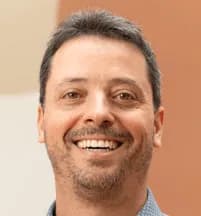
Javier Sandin Llorente
Senior Lead, Operations & Grant Management
Over the past fifteen years, Javier has held roles in EU and international bidding, project and contract management, as well as operations and business management across several research organisations, primarily in the UK. He has been involved in both the pre-award and post-award phases, including call identification, project management, monitoring, and reporting for R&D projects. In addition, he has volunteered as a bid writer and administrator for several NGOs working in the areas of human rights, water supply and sanitation, and education.